
We remove trees when they are a safety concern based on the three "D's" - Dead, Diseased or Dying. We prioritize removal schedules by severity of the issue. The City removes trees all-year-round.
Forestry
The City of Prince Albert is responsible for maintaining trees on public property (City-owned trees). Property owners are responsible for maintaining the trees on their private property.
Municipal tree services include:
- Tree removal
- Tree trimming
- Tree planting
- Fertilizing
- Disease diagnosis
- Pest diagnosis
- After hours emergency service, such as tree damage during a wind storm
Call the After Hours Assistance number for emergency tree services.
Tree Maintenance
Our Urban Forest department manages the maintenance of City-owned trees, including trimming, removal and planting. See the Forestry Management Plan for detailed information on how the City plans and manages city trees and vegetation in Prince Albert.
When does the City remove trees?
How does the City decide which trees are removed first?
As a guideline, the Urban Forest department will prioritize each work order based on the following criteria:
Emergency
Tree poses immediate safety concerns and danger to the public. For example:
- Tree trunk or large branch has fallen across a road, blocking traffic
- Tree is splitting, cracking and/or leaning, showing signs of imminent failure
High
Tree interferes with City infrastructure, is damaging property, has been approved for removal due to building/development, has been approved due to confirmed disease and/or obstructs public or service access. For example:
- Removal of tree to repair existing utilities
- Branches rubbing against a building
- Tree blocking sanitation service delivery and/or prevent vehicle damage
- Tree root system has entered the sewer system on a private residence and removal has proven to help ongoing costs to clear the lines
- Paving program
- Tree is causing sight line or visibility issues
Low
General tree pruning and maintenance. For example:
- Tree needs pruning for the health of the tree and to relieve the weight of low hanging branches
- City-owned tree has die-back but is not considered a hazard
Why does it take so long to get a tree near my property trimmed?
Every spring our Urban Forest department receives hundreds of work requests. It can take our staff months to complete the large number of requests we get.
A windstorm can prevent us from getting to your tree right away, as safety hazards and dangerous trees take priority and move to the top of our work list.
Why are some private-owned trees removed or pruned?
The City prunes private trees that impede access to sidewalks, roadways or block the view of signage. Right of way access is to be provided to ensure the safety of pedestrians and drivers. In addition, trees that are categorized as Emergency or possibly High priority.
Dutch Elm Disease
Currently, the most significant issue affecting trees in the City of Prince Albert is Dutch Elm Disease (DED.) If you are unsure if the tree(s) in question are Elm, we would encourage you to contact the Community Services Department so that proper identification can be made and direction provided.
What is Dutch Elm Disease (DED)?
DED is caused by a fungus spread by tiny elm bark beetles that breed under the bark of dead or dying elm wood. If that wood contains the DED fungus, each new generation of beetles can infect healthy elms. The Government of Saskatchewan website Dutch Elm Disease provides information on how you can help prevent DED.
DED was first discovered in Saskatchewan in 1981 and continues to be found in more areas of the province every year. DED is caused by a fungus that clogs the tree’s water conducting system, which eventually causes the tree to die, usually within one or two seasons.
Beginning in late June to mid-July, look for:
- Flagging - when the leaves of one or more branches near the top of the tree wilt, curl, turn yellow and then brown; remaining on the tree.
- Staining - infected twig sample will have red streaks through the sapwood.
Several other diseases have similar symptoms so the only way to confirm DED is in the lab. Please contact the City of Prince Albert's Community Services for further assistance.
Elm Tree Pruning Ban April 1 - August 31
The province annually bans the pruning of elm trees from April 1 – August 31. The ban ensures that elm bark beetles, which transmit Dutch Elm Disease (DED), are not attracted to the pruning cuts when these beetles are most active.
Elm removal can occur at any time of the year with approval from the Municipal DED Inspector, however the entire tree must be removed and all waste elm be transported to the nearest approved landfill site in the municipality where the elm was removed.
Elm stumps and any fallen branches or any wood from a fallen elm tree must be disposed of properly at an approved landfill site. Under no circumstances should elm wood be left lying around or stored for firewood or other purposes. In Prince Albert, the City’s landfill, located north of Prince Albert, is an approved site. Please note that there will be a fee for commercial hauling of green waste.
Anthracnose is a common and destructive group of fungal pathogens that attach various shade trees.
Anthracnose Hosts
Ash, Maple, Oak and Dogwood
Anthracnose Biology & Symptoms
Extended periods of cool, wet weather exacerbate and make anthracnose difficult to control. Generally, the fungus overwinters in infected, dead leaves lying on the ground. During cool, wet springs, minute blister-like swellings form on the infected tissues. These swellings release thousands of spores disseminating via wind, to infect new leaves. Brown necrotic tissue develops along leaf veins, which leads to premature leaf drop. Depending on the severity of the disease, there are varying amounts of leaf drop each season.
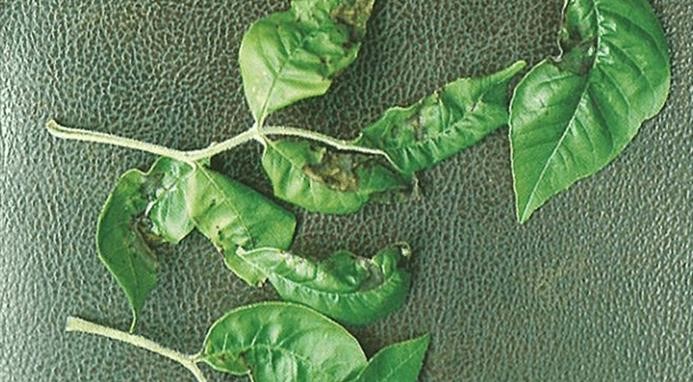
Ash Tree Anthracnose Symptoms and photo
- Irregularly shaped, brown areas along veins on new leaves
- In late summer/early fall severe infection can cause premature leaf drop
Creeping Bellflower
Help Stop the Spread of Creeping Bellflower in Prince Albert
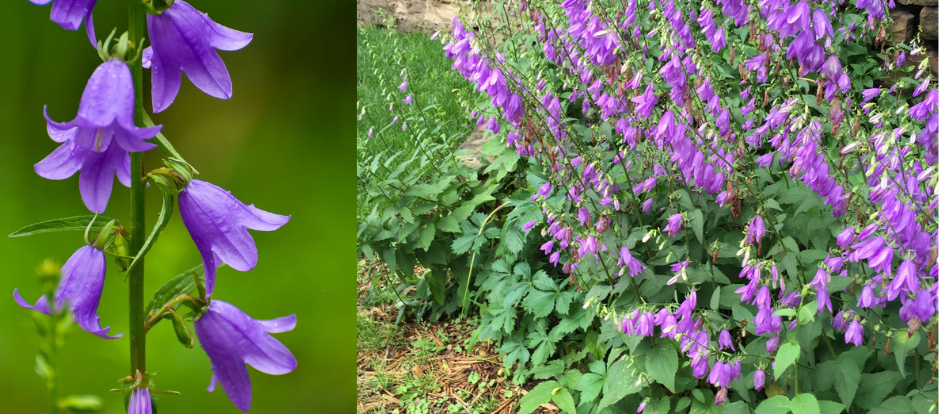
Creeping Bellflower (Campanula rapunculoides) is an invasive perennial plant that has become increasingly common throughout Prince Albert. While its purple, bell-shaped flowers may look attractive, this plant spreads aggressively through both seeds and underground roots, making it difficult to control once established.
The Government of Saskatchewan identifies Creeping Bellflower as a Schedule II Noxious Weed under The Weed Control Act because it can quickly invade lawns, gardens, boulevards, parks, and other landscaped areas.
Early detection and persistent removal are the best ways to prevent Creeping Bellflower from spreading.
How to Identify Creeping Bellflower
Look for these key characteristics:
Flowers
- Purple, blue, or bluish-purple bell-shaped flowers
- Flowers grow along one side of a tall, upright stem
- Typically blooms from early to mid-summer
Leaves
- Lower leaves are heart-shaped with long stems
- Upper leaves become narrower and attach directly to the stem
Roots
- Deep, fleshy, carrot-like taproots
- Extensive underground rhizomes that spread beneath the soil
- New plants can grow from even small root fragments left behind
Creeping Bellflower spreads rapidly and competes with desirable plants for sunlight, water, and nutrients. Because it reproduces by both seeds and underground roots, it can quickly form dense patches that are difficult to eliminate.
Once established, it often requires several growing seasons of repeated treatment to control.
How to Control Creeping Bellflower
Dig It Out
For small infestations:
- Carefully dig out the entire plant.
- Remove as much of the root system as possible.
- Even small pieces of root can produce new growth.
- Monitor the area regularly and remove any regrowth immediately.
Prevent Seeds from Spreading
Before flowers produce seeds:
- Remove flower stalks.
- Dispose of flower heads before seeds mature.
This helps reduce the spread to neighbouring properties.
Smother Larger Infestations
For established garden patches:
- Cover the affected area with heavy cardboard or an appropriate tarp.
- Leave the cover in place for one or more growing seasons.
- Check regularly for any shoots emerging around the edges.
Herbicide Use
Herbicides may be appropriate in some situations.
Always:
- Use a product registered for the intended use.
- Follow all label directions, precautions, and restrictions.
- Avoid contact with desirable plants.
Proper Disposal
Do not compost Creeping Bellflower roots or seed heads.
Instead:
- Place removed plants in a sealed garbage bag.
- Dispose of them with your household garbage where permitted.
Proper disposal helps prevent the plant from spreading to new locations.
Removing only the visible portion of the plant will not eliminate Creeping Bellflower. Its underground root system allows it to regrow repeatedly.
Successful control requires:
- Early identification
- Thorough removal of roots
- Regular monitoring
- Prompt removal of any new growth
Persistence is the key to long-term success.
For additional information on identifying and controlling invasive weeds, consult the Government of Saskatchewan's Urban Guide to Weed Control.
This format is optimized for a municipal website with clear headings, short paragraphs, and keywords that improve readability and search engine visibility. It would also work well with photos showing the flowers, leaves, and root system alongside the identification section.


